Why Does My Appliance Keep Tripping the Breaker?
You start a load of laundry, walk away, and ten minutes later half the house goes quiet. You reset the breaker, it holds for a while, and then it happens again. If you’re wondering why your appliance keeps tripping the breaker, the honest answer is that your home is telling you something specific – and the trip itself is the safety system doing exactly what it was designed to do.
The tricky part is that a tripping breaker can point at two very different problems. Sometimes the appliance is failing. Sometimes it’s fine and the circuit feeding it isn’t up to the job. Telling those apart before you spend money is the whole game.
The Short Answer: Why Your Appliance Keeps Tripping the Breaker
An appliance keeps tripping the breaker for one of three electrical reasons: the circuit is overloaded, the appliance has developed a short circuit, or current is leaking to ground. Overloads usually mean too much demand on one circuit. Shorts and ground faults usually mean a failing appliance or damaged wiring. A breaker that trips repeatedly should be diagnosed, not simply reset.
First, the One Rule That Actually Matters
Before anything else: repeatedly flipping a breaker back on is not a fix, and it isn’t harmless.
Electrical safety guidance from the University of Washington’s Environmental Health & Safety department puts it plainly – you should determine the cause of a trip before resetting, it’s only safe to reset once you’ve established the cause was an overload, and repeatedly resetting a breaker can lead to an arc flash or a fire. If the cause is a short circuit or a ground fault, that guidance calls for a qualified electrician to investigate.
Their list of situations where you should stop and get help is worth memorizing: a wet panel, visible wires behind a breaker, more than one tripped breaker, or a breaker that has tripped repeatedly.
That last one is the whole reason you’re reading this. Treat a repeat offender as information, not an inconvenience.
There’s a good reason for the caution. NFPA research on home fires involving electrical distribution and lighting equipment consistently ranks this category among the leading contributors to house fires. A breaker doing its job is the last line of defense, not a nuisance to work around.
The Three Things a Breaker Is Reacting To
Almost every trip comes down to one of three conditions.
Overload
More current is flowing through the circuit than it’s rated to carry. The breaker heats up, and at a certain point it opens. Overloads are usually a math problem: a 15-amp kitchen circuit running a toaster, a microwave, and a coffee maker simply doesn’t have the headroom.
Overloaded circuits tend to announce themselves before they trip. The UW guidance lists the classic warning signs: appliances that seem underpowered, lights that flicker or dim when something else kicks on, buzzing from outlets or switches, and outlet or switch plates that feel warm.
Short Circuit
Hot and neutral conductors make direct contact, current spikes dramatically, and the breaker opens almost instantly. Inside an appliance, this often means damaged insulation, a failing motor winding, or a chafed internal wire. Shorts are the most urgent of the three because of the heat involved.
Ground Fault
Current escapes its intended path and finds a route to ground – often through moisture. This is why washing machines, dishwashers, and anything in a garage or basement are frequent offenders. Ground faults are a shock hazard as much as a fire hazard, which is why protected outlets are required in wet locations.
When the Appliance Is Tripping the Breaker
If the fault is inside the machine, the pattern usually gives it away. A few common culprits, by appliance:
- Refrigerators and freezers. A compressor with a failing start winding draws a heavy surge trying to kick on. Classic sign: the trip happens at the moment the compressor cycles, not randomly.
- Clothes dryers. A cracked or partially shorted heating element is a frequent cause, as is lint-packed airflow forcing the unit to run hotter and longer than designed.
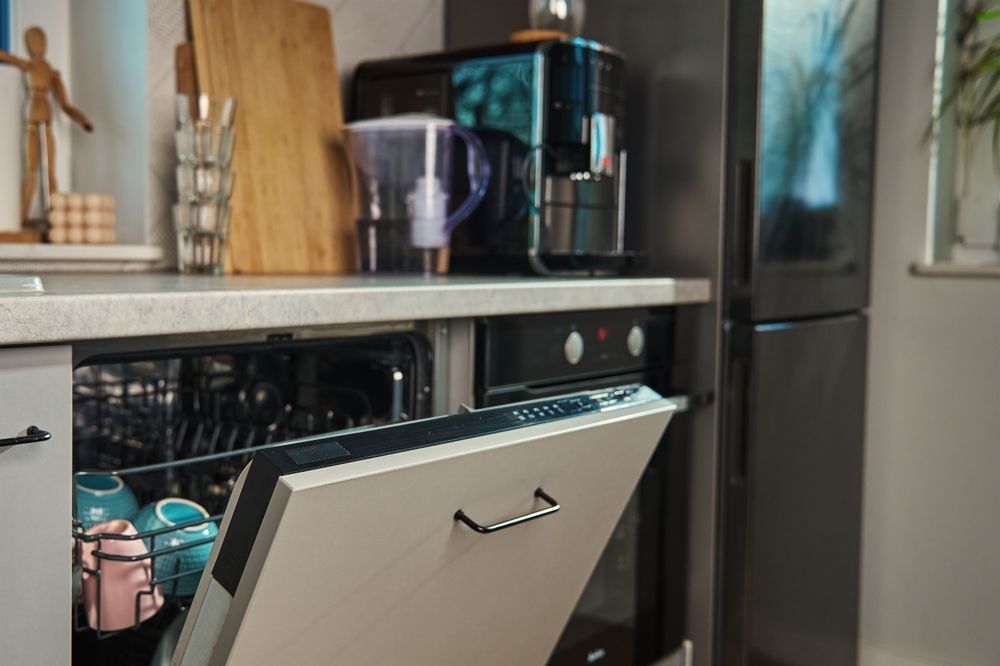
- Dishwashers and washing machines. Water and electricity in the same box means ground faults, worn pump motors, and degraded door or lid switches.
- Ovens and stoves. Heating elements can develop a short as they age, sometimes visibly arcing or blistering at the failure point.
- Anything with a damaged cord. A cord pinched behind the appliance or crushed under a leg is a real and often-missed cause.
While you’re investigating, check whether your model has been recalled. Recalls involving components that can overheat or short-circuit are more common than most homeowners realize, and the CPSC’s recall database is searchable by product category. If a manufacturer has already acknowledged a defect, you may be owed a free repair rather than a service bill.
When the Circuit Is Tripping the Breaker
Now the other half. The appliance may be perfectly healthy and still trip a breaker if the circuit behind it isn’t right.
- Too much sharing. Older homes often run several rooms off one circuit. Add a space heater or a window unit and there’s no margin left.
- No dedicated circuit. Large appliances are generally meant to have a circuit to themselves. When a big load shares with everything else, trips are predictable.
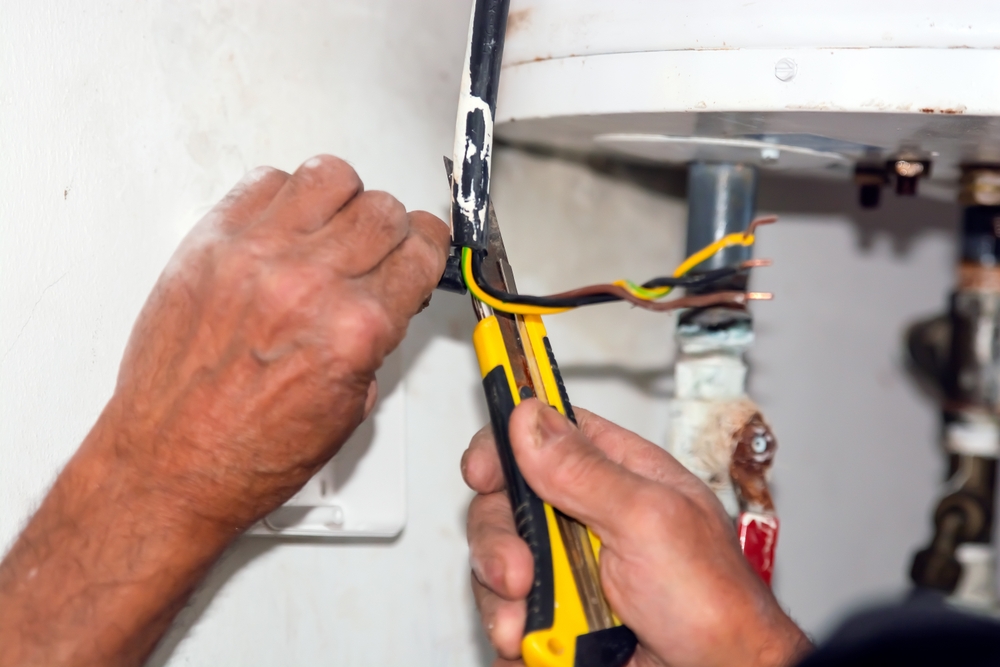
- Loose connections. A loose terminal at an outlet, junction, or the breaker itself creates resistance and heat. This one deserves urgency, since loose connections are a well-documented arcing risk.
- A tired breaker. Breakers are mechanical and they do wear out, especially after many trips. A breaker that has become oversensitive is a genuine possibility – but it’s a conclusion to reach after ruling out real faults, never a first assumption.
- Undersized or damaged wiring. Wiring degraded by age, rodents, or a drywall screw driven through it decades ago can fault intermittently in ways that are maddening to chase.
If several circuits in your home are struggling, the issue may be bigger than one appliance. Our guide to upgrading your home’s electrical system covers what that involves.
Is It the Appliance or the Circuit? Three Clues
You can narrow this down considerably without any tools.
Clue one: the swap test. Unplug the appliance and run it on a different circuit – ideally in a different room, since nearby outlets are often on the same circuit. If it trips the new breaker too, the appliance is the problem. If it runs fine, look at the original circuit. This only applies to plug-in appliances; hardwired equipment needs a professional.
Clue two: the timing. When the trip happens is diagnostic. An instant trip the moment the appliance starts suggests a short or a motor failing to start. A trip after several minutes of running points toward an overload or a heating element drawing more current as it warms. A trip only when other things are running is almost always a shared-circuit capacity issue.
Clue three: the isolation test. Turn off or unplug everything else on that circuit and run the appliance alone. Still trips? The load isn’t the issue. Runs fine? You’ve found your overload.
Write down what you observe. The UW guidance recommends documenting each trip to help identify the underlying root cause, and it’s useful – a technician arriving to “it trips every time the fridge cycles” is starting from a much better place than “it trips sometimes.”
What If It’s a GFCI or AFCI Breaker?
Not all breakers are the same, and this changes the interpretation.
According to the Electrical Safety Foundation International, you can identify these by looking at the breaker faces in your panel: both AFCI and GFCI breakers have a TEST button, and standard breakers don’t. If you see a TEST button, the sticker on the breaker tells you which type it is.
The distinction matters because they watch for different things. GFCIs protect people from shock by detecting current leaking off its intended path. AFCIs protect against fires from arcing faults – the dangerous sparking that occurs when wiring becomes damaged, stressed, overheated, or worn, and which may not draw enough current to trip a conventional breaker at all. ESFI notes the National Electrical Code requires AFCI protection in bedrooms and living areas of newly built homes.
So a GFCI tripping repeatedly on a washer often points to moisture or a failing motor seal. An AFCI tripping points toward an arcing condition somewhere – which is precisely the situation you want investigated rather than reset. Some older motors can also cause nuisance trips on these devices, but that determination belongs to an electrician, not a guess.
The One Thing You Should Never Do
Do not install a larger breaker to stop the tripping.
It’s the most tempting shortcut in home electrical work and one of the most dangerous. The breaker is sized to protect the wire behind it, not the appliance. Put a 30-amp breaker on wiring rated for 15 amps and you haven’t solved an overload – you’ve removed the protection keeping that wire from overheating inside your walls. The trips stop. The hazard grows.
If a circuit genuinely needs more capacity, the correct fix is a properly sized circuit with properly sized conductors, which is electrical work with a permit and an inspection.
Appliance Repair or Electrician? How to Decide
Here’s a practical dividing line. Call for appliance repair when the appliance trips a breaker on multiple circuits, when the trip tracks a specific mechanical event like a compressor cycling, or when the unit is also showing other symptoms – not heating, not draining, running loud.
Call an electrician when several appliances trip the same circuit, when multiple breakers are involved, when the panel is warm or buzzing, when you smell anything burning, or when the home is old enough that the wiring hasn’t been evaluated in decades. Our list of warning signs of electrical trouble at home goes further on that.
And when you can’t tell? That’s a fine reason to call. Diagnosing which side of the outlet the fault lives on is routine work, and it’s cheaper than replacing a working appliance because the real problem was in a junction box.
The Bottom Line
A breaker that trips once is an event. A breaker that trips repeatedly is a diagnosis waiting to happen. The three clues above – swap, timing, isolation – will usually tell you whether you’re looking at a failing appliance or a circuit that can’t keep up, and that’s most of what a technician needs before arriving.
What matters most is not normalizing it. The reset is easy, which is exactly what makes it risky.
If you’re in Franklin, Nashville, Spring Hill, or elsewhere in Williamson County and something in your house keeps knocking out a breaker, we can sort out which side of the problem it’s on – appliance or wiring – because we work on both. Get in touch and we’ll take a look.
Frequently Asked Questions
Is it dangerous to keep resetting a tripped breaker?
Yes, if you haven’t identified why it tripped. Published electrical safety guidance is consistent on this: determine the cause first, and only reset when you’ve established the cause was a simple overload. Repeated resetting can contribute to arc flash or fire risk, and if a short circuit or ground fault is behind the trips, the circuit needs a qualified electrician. One reset to test a theory is reasonable. A daily habit of resetting is not.
Can a bad circuit breaker cause false tripping?
It can. Breakers are mechanical devices, and after many trips or many years they can become oversensitive and open under normal load. That said, a worn breaker should be the conclusion you reach after eliminating overloads, shorts, ground faults, and loose connections – not the first assumption. Replacing a breaker that was correctly detecting a real fault removes protection without fixing anything, which is why diagnosis order matters here.
Why does my refrigerator trip the breaker only sometimes?
Intermittent trips that coincide with the compressor starting usually point to a compressor or start-component problem. The motor draws a substantial surge on startup, and a degraded winding or failing start relay pushes that surge past what the breaker tolerates. Because the compressor only cycles periodically, the trips look random. If it also runs warm, cycles oddly, or sounds different than it used to, have the appliance evaluated.
Do large appliances need their own dedicated circuit?
Generally yes. Major appliances are typically intended to run on a circuit serving nothing else, so their demand doesn’t compete with other loads. Requirements vary by appliance type and by the code edition your jurisdiction has adopted, so the specifics should be confirmed against the manufacturer’s installation instructions and with a licensed electrician. If a large appliance currently shares a circuit, that alone can explain persistent tripping.
Should I check whether my appliance has been recalled?
It’s worth a few minutes. Recalls involving appliances whose components can overheat or short-circuit are issued regularly, and the CPSC maintains a searchable database of recalls and safety warnings organized by product category. If your model is affected, the manufacturer’s remedy is often a free repair, replacement, or refund – which is a considerably better outcome than paying for a service call on a known defect.